
 Svenska
 Suomi
Suomi
 Norsk
Norsk
Cart
Your cart is empty, but doesn't have to be..
Your cart is empty, but doesn't have to be..
Johan Pettersson |24/02, 2026
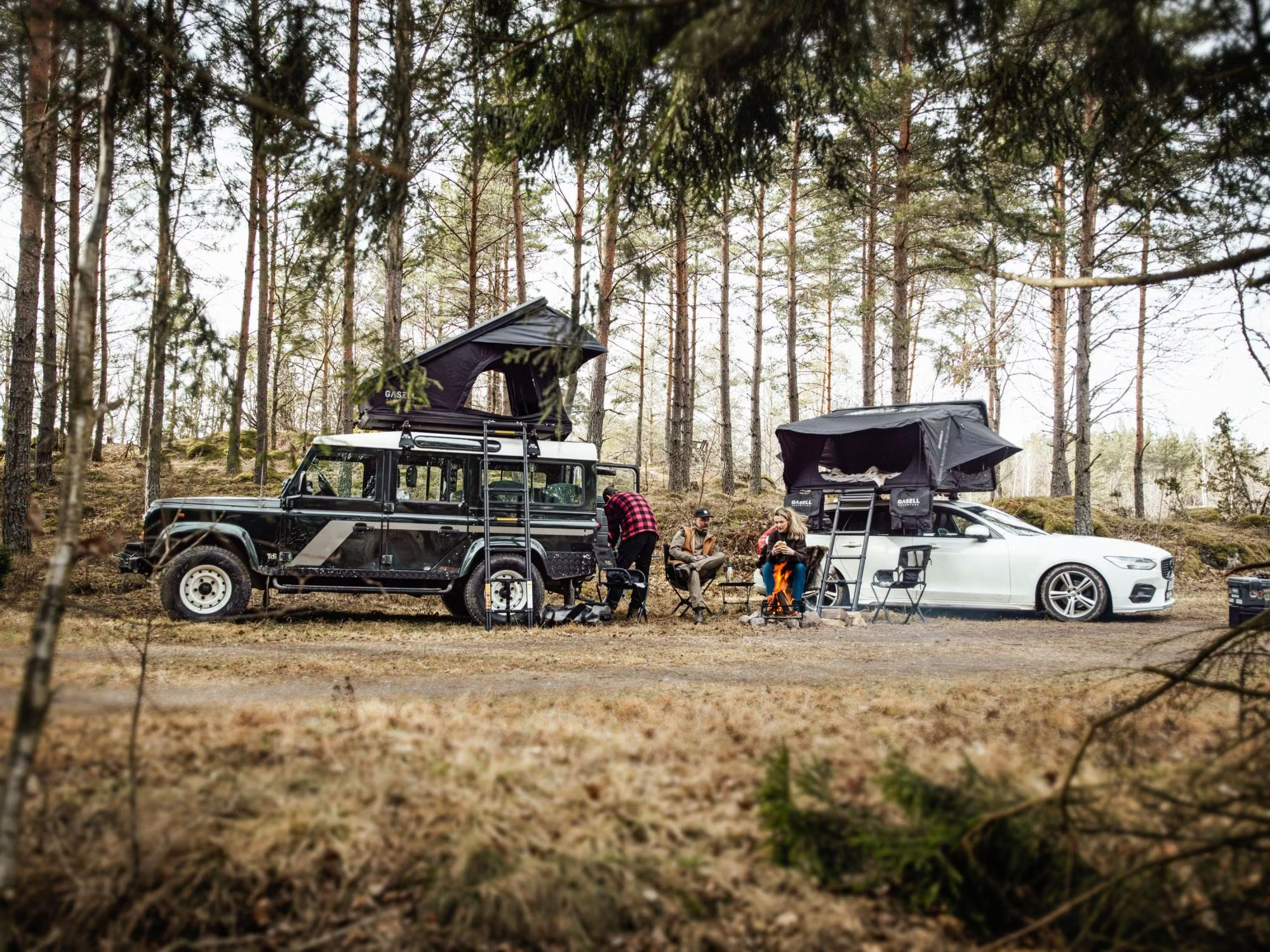
Interest in hard-shell roof tents continues to increase in 2026. More and more people who invest in car roof tents are choosing hard-shells over soft-shells – and there are clear reasons why.
But is a hardshell right for everyone? Here we go over the advantages, disadvantages and when a hardshell roof tent is the best choice.
A hard shell roof tent has a solid outer shell, usually made of aluminum or ABS. When the tent is folded, the shell protects the tent fabric, making the structure more robust and aerodynamic.
Unlike soft shells, where the tent fabric is more exposed, the hard shell acts as a protective cover during transport.
Advantages of hard shell:
A modern example is the Gasell GM 2026 , a hardshell roof tent developed for Nordic climates with a focus on quick use and durable construction.
When comparing hardshell and softshell roof tents, there are some clear differences.
For those of you who often make short stops or spontaneous overnight stays, hardshells are often more convenient.
Swedish conditions place higher demands than many other markets.
Rain, crosswinds and temperature changes really put the construction to the test.
A hardshell roof tent provides:
For winter camping, hardshells are also a clear plus thanks to their robust structure.
A hardshell roof tent is especially good when:
For those of you who use roof tents frequently, the extra investment may be well worth it.
An example of a hardshell roof tent developed with these needs in mind is the Gasell GM 2026, designed to withstand both Nordic weather and longer road trips.
For a balanced picture, it is important to mention:
But too many people outweigh the benefits – especially when you see it as a long-term investment.
Hardshell roof tents have become the most popular choice in 2026 for a reason. They offer speed, stability and better protection in Nordic conditions.
For those who want a roof tent for their car that works in both summer and winter, hard shells are often the most practical option.
If you want to read more about how a modern hardshell roof tent is constructed, you can see the details about the Gasell GM 2026 on our product page.